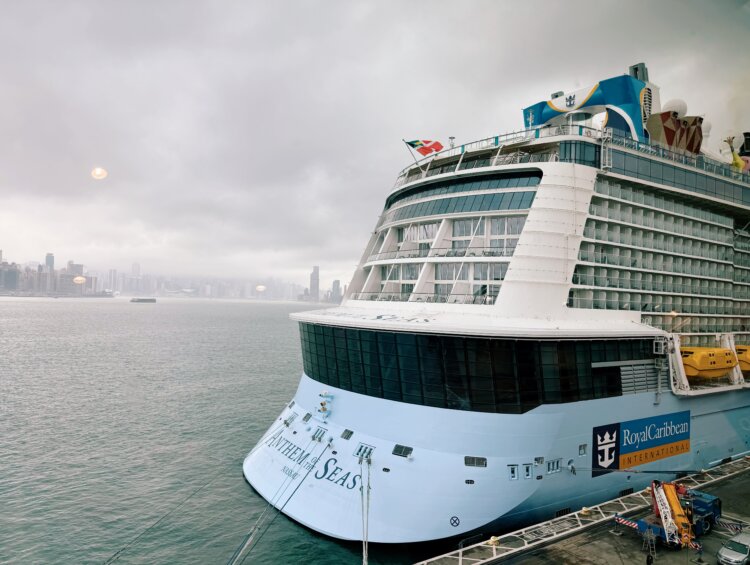
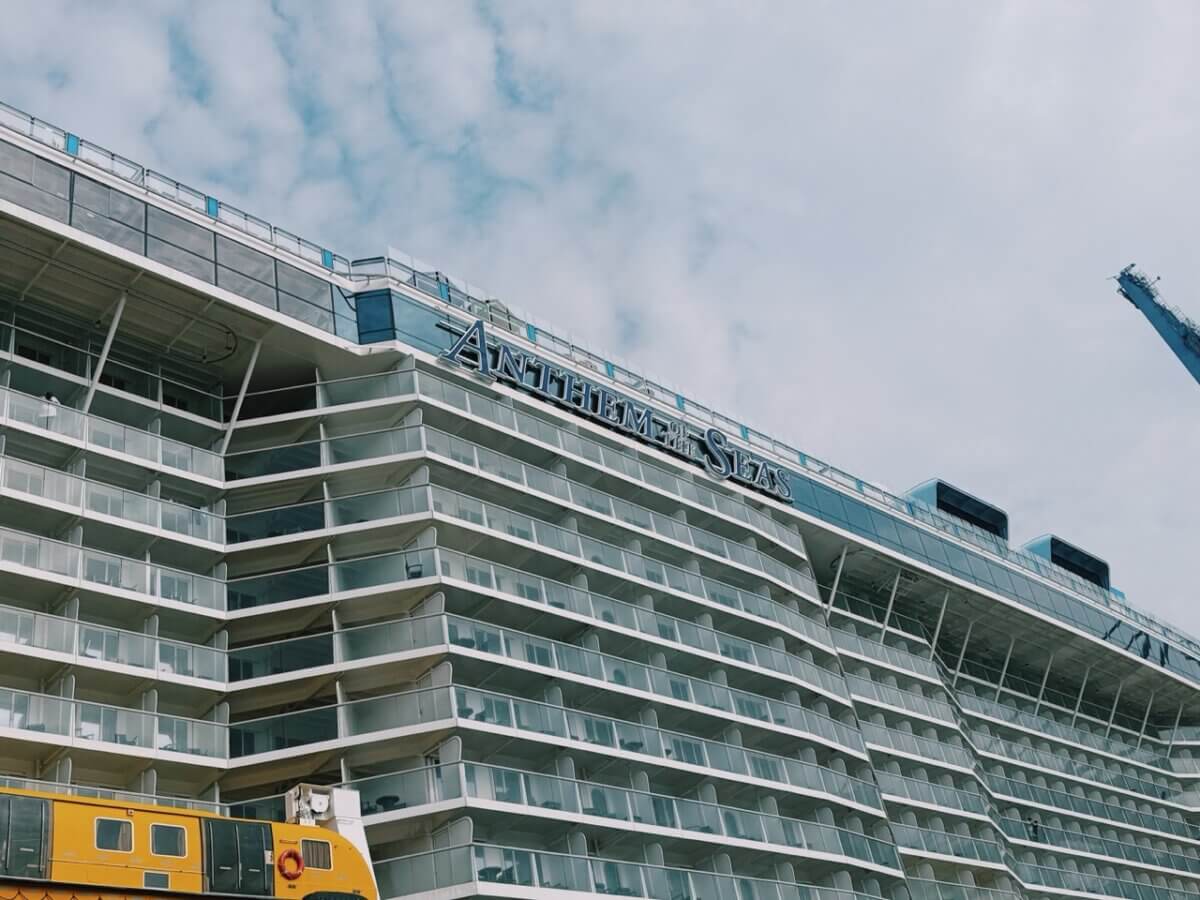
Royal Caribbean’s Anthem of the Seas made national news in February 2016 after the ship encountered an unexpectedly powerful storm off the U.S. East Coast.
The incident remains one of the most widely discussed weather events involving a modern cruise ship, with dramatic passenger photos, real-time reports from onboard passengers, and questions about how the storm was forecast.
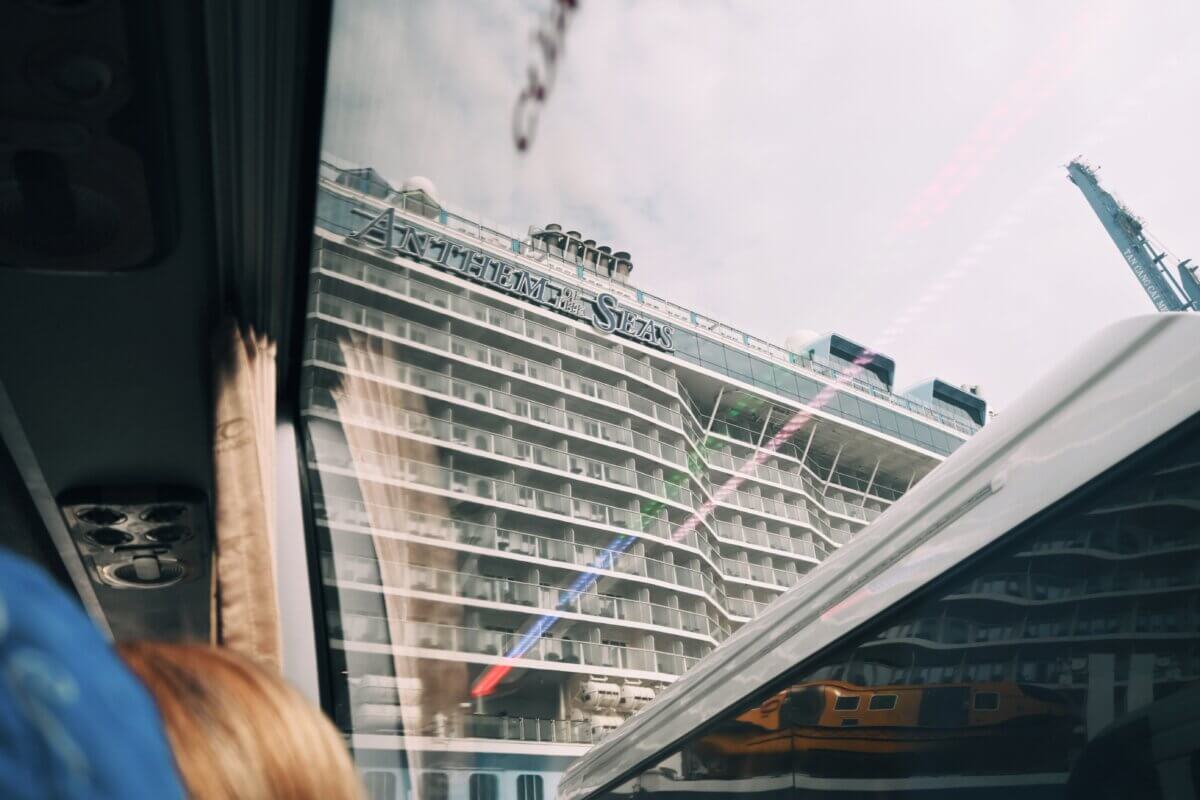
On Saturday, February 6, 2016, Anthem of the Seas left Cape Liberty in Bayonne, New Jersey, for a weeklong cruise to Florida and the Bahamas. Less than 24 hours later, as the ship sailed south off the Carolina coast, it ran directly into a rapidly intensifying winter storm.
Royal Caribbean later said the ship encountered “extreme wind and sea conditions” that exceeded what had been forecast.
Anthem of the Seas caught in storm with wind gusts up to 122 mph and 30-foot waves
Conditions quickly became severe for the Royal Caribbean ship. According to NOAA and passenger reports:
- A buoy near the ship measured 30-foot waves
- Screenshots from cabin TVs showed wind gusts up to 106 knots (about 122 mph)
- Hurricane-force winds rocked the ship for hours
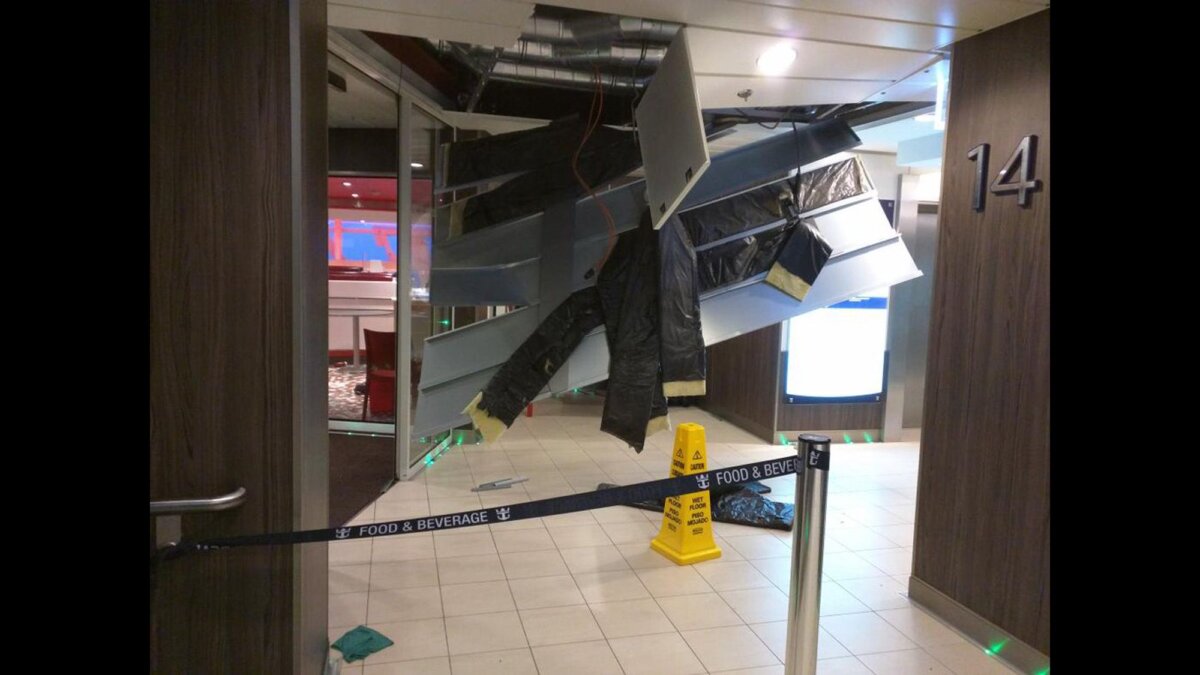
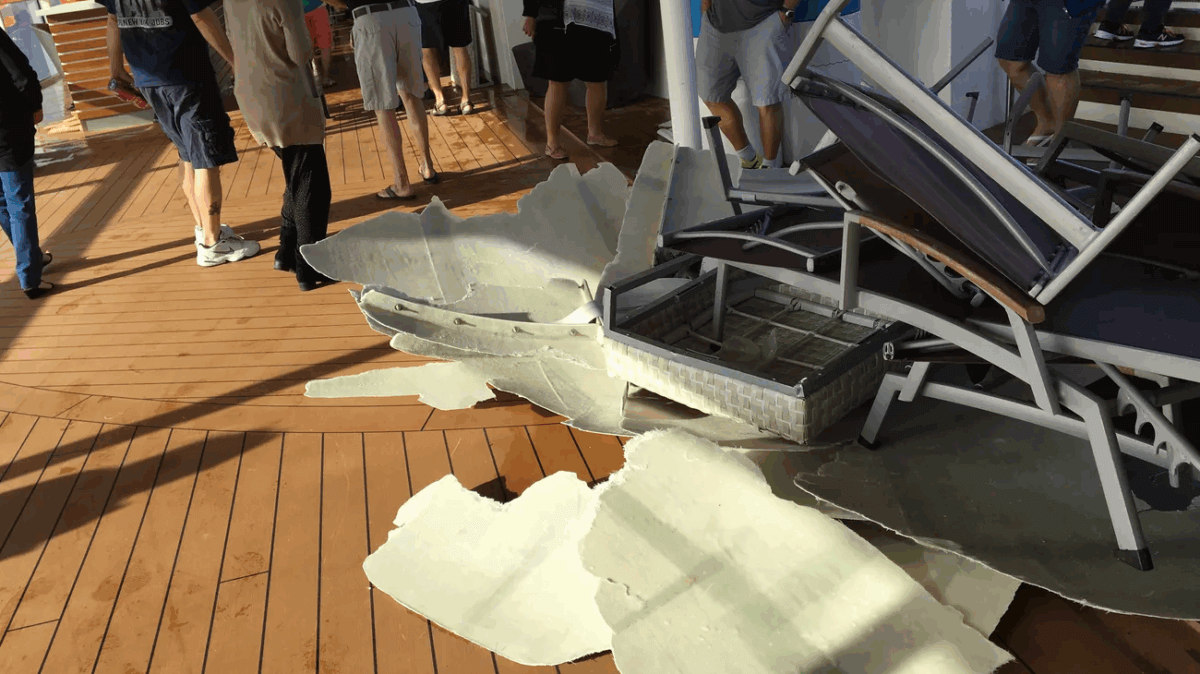
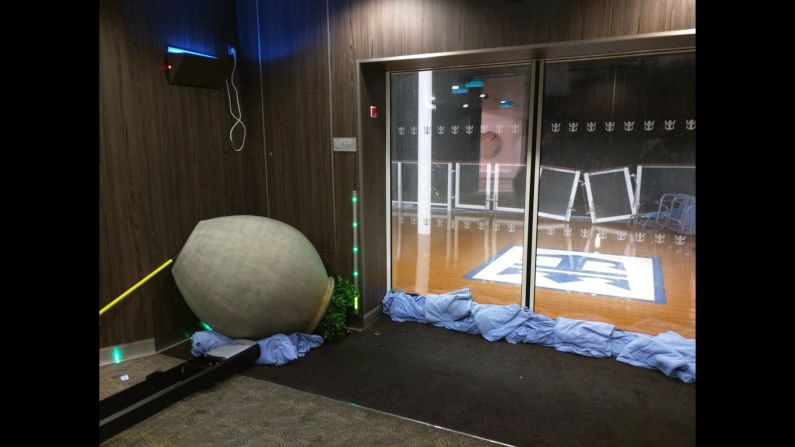
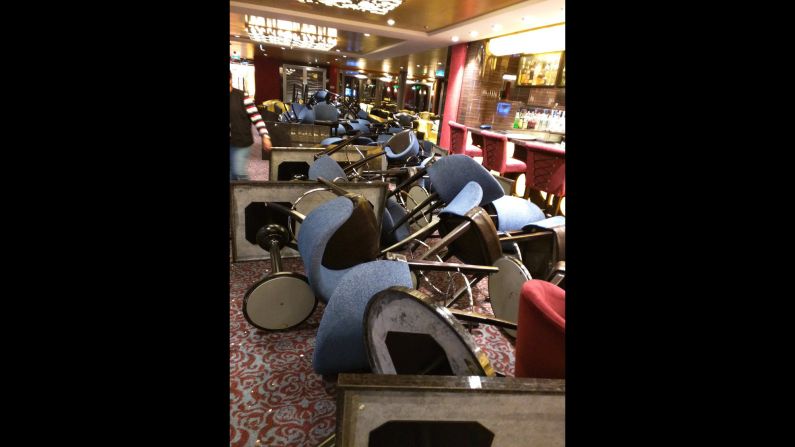
Passengers reported overturned furniture, shattered glass, and even a section of the ceiling collapsing in a public corridor. Some balcony cabins saw water intrusion as waves hit the ship broadside. Four passengers were injured, though none seriously, according to Royal Caribbean.
“Truly terrifying”: Passengers confined to cabins
As the storm intensified on Sunday afternoon, the captain ordered all guests to remain in their staterooms for safety.
Robert Huschka, a journalist from the Detroit Free Press who was onboard, said the captain described the day as one of the most challenging of his career. Passengers described hearing the ship shudder as it attempted to turn into the wind and hold position.
“The ship was leaning so much that water from a faucet hit the wall instead of going down the drain. Glasses were tumbling off the counter,” stated one passenger to CNN, who estimated the ship was tilting at least 45 degrees. However, the US Coast Guard found that Anthem of the Seas only listed 18 degrees.
Anthem of the Seas was caught in the storm for 8 to 10 hours. Passengers even reported lying face down on the mattress of their bed as Anthem of the Seas rocked in the Atlantic Ocean.
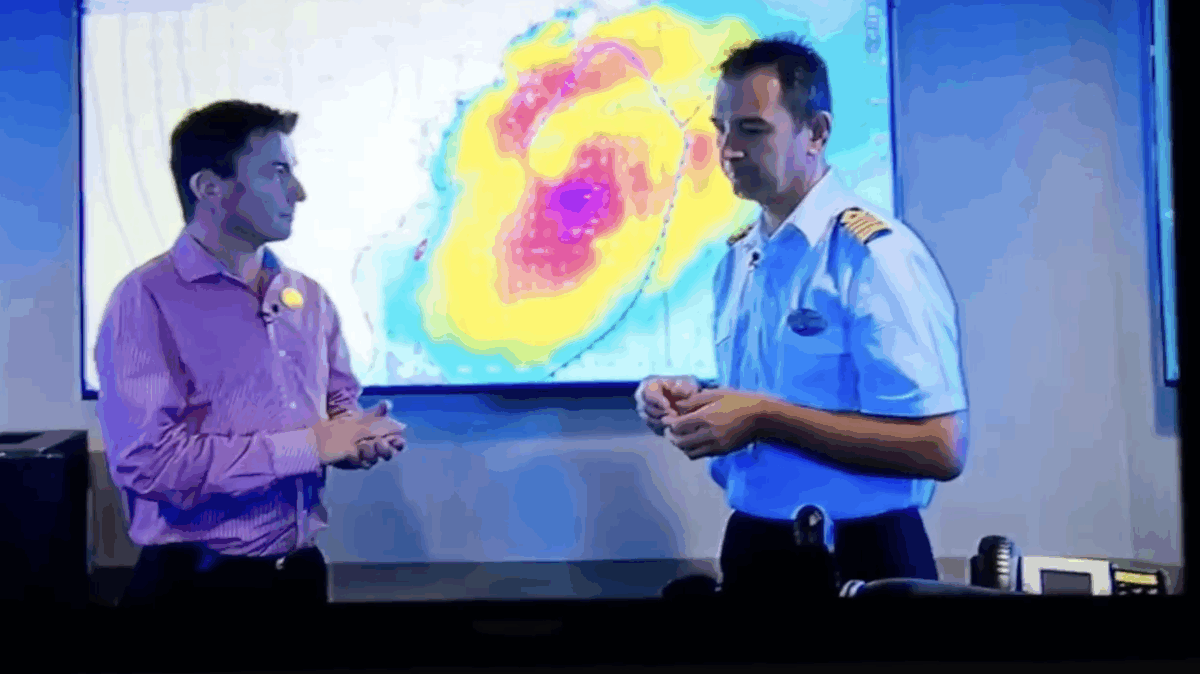
In a video of Captain Claus Anderson discussing the storm onboard Anthem of the Seas the following day, he states:
“What we experienced yesterday was something very special. I honestly have not seen a low-pressure system develop like that. We were supposed to have four to five meters of seas and 40 to 50 knots of wind, and then it just started to boil around us. In eight to ten hours it went from nothing to a full-blown storm.”
However, Captain Claus said he was confident in the ship, saying that Anthem of the Seas handled the storm very well, especially considering the storm’s sudden strength. He also acknowledged that it was “very uncomfortable, very scary for not only our passengers, but also our crew.”
The captain also thanked his operational team for staying calm and ensuring their job was done safely.
NOAA had warned of hurricane-force winds
One of the most debated parts of the incident was whether the storm should have been avoided. According to NOAA’s Ocean Prediction Center, the first alert predicting “developing hurricane-force winds” was issued Friday afternoon.
Later, an official warning for 63–75 mph winds went out Saturday evening, the day before the ship encountered the storm. Royal Caribbean said the actual wind speeds were significantly higher than those forecasts.
By late Sunday night, conditions began to improve. The ship resumed normal movement around 1 a.m. Monday, but Royal Caribbean made the decision to abandon the planned itinerary.
Rather than continue to Florida, Anthem of the Seas turned around and returned back to Bayonne. In a statement, the cruise line said it wanted to avoid additional bad weather and acknowledged that guests had been through “an uncomfortable ride.”
Anthem of the Seas storm aftermath
Royal Caribbean issued a full refund for all guests onboard, plus a future cruise credit equal to 50% of the fare paid. The line also emphasized that while the storm was intense, the ship remained structurally sound and seaworthy throughout the event.
Most of the damage to Anthem of the Seas was cosmetic. This included broken glass around the pool deck, debris from outdoor areas, minor flooding through some balcony doors, and ceiling damage in one corridor.
Cleanup began quickly, and the ship resumed normal operations after returning to Cape Liberty.
In the months that followed the Anthem of the Seas storm, Royal Caribbean made a major change to how it monitors weather. The cruise line hired its first-ever Chief Meteorologist, James Van Fleet, in 2017 to provide in-house forecasting and real-time support for the fleet.
His role included monitoring developing systems, advising captains on routing decisions, and improving communication with guests during weather events. While the company never stated outright that the hire was solely because of the 2016 storm, industry reports and Royal Caribbean’s own commentary suggest the incident played a significant role in expanding the cruise line’s weather-tracking capabilities.
Investigation into Anthem of the Seas storm incident
After the incident, a formal investigation by the Bahamas Maritime Authority found that the storm encountered by Anthem of the Seas far exceeded the predictions in official forecasts, with measured wind speeds up to 146 knots and wave heights up to 15 meters.
The investigation highlighted limitations in onboard weather‐sensing equipment and decision-making procedures, but did not find structural failure of the ship nor place blame on an individual. Instead, it recommended enhanced forecasting support, improved routing protocols and reliable sensor technology.