

Norwegian Cruise Line is one of the most recognizable brands in the modern cruise industry, known for its contemporary ships and flexible approach to onboard experiences.
While many travelers are familiar with the product itself, not everyone know’s about the corporate structure behind Norwegian Cruise Line or how it evolved into a major global operator.
Today, Norwegian Cruise Line operates as part of a publicly traded cruise conglomerate, a structure shaped by decades of expansion, rebranding, and strategic mergers. Below is an overview of who owns Norwegian Cruise Line and how the company developed over time.
NCL’s Current Ownership Structure

Norwegian Cruise Line is owned by Norwegian Cruise Line Holdings Ltd., a Miami-based cruise holding company listed on the New York Stock Exchange.
Norwegian Cruise Line Holdings is not privately owned or controlled by a single parent corporation. Instead, it is majority-owned by public shareholders and overseen by a board of directors and executive leadership team. The company operates three distinct cruise brands, each targeting a different segment of the market:
- Norwegian Cruise Line
- Oceania Cruises
- Regent Seven Seas Cruises
Each brand maintains its own identity and onboard experience while benefiting from shared corporate resources and long-term strategic planning.
A brief history of Norwegian Cruise Line

Norwegian Cruise Line was founded in 1966 under the name Norwegian Caribbean Line, initially offering Caribbean sailings.
In its early years, the company helped pioneer year-round cruising in the region, setting it apart from competitors that operated seasonally.
One of the most notable chapters in Norwegian’s early history was the operation of the SS Norway (formerly SS France), which entered service in the late 1970s. At the time, the ship was one of the largest passenger vessels in the world and helped elevate Norwegian Cruise Line’s profile within the industry.

The brand expanded steadily over the following decades, rebranding as Norwegian Cruise Line in 1987 to reflect its growing international reach.
By the early 2000s, Norwegian had established itself as an innovator, particularly with the introduction of Freestyle Cruising. This has become a core identity for Norwegian Cruise Line, as it removed fixed dining times and formal dress requirements. Many attribute the move as influencing an industry-wide shift toward more casual cruising.
Timeline: Norwegian Cruise Line’s Development and Ownership

1966: Norwegian Caribbean Line is founded, initially operating Caribbean itineraries with a focus on relaxed cruising.
1970s–1980s: The company expands its fleet and itineraries, helping popularize year-round Caribbean cruising.
1987: The brand officially rebrands as Norwegian Cruise Line, reflecting its expanding global presence.
Early 2000s: Norwegian introduces Freestyle Cruising, eliminating traditional dining schedules and formal dress codes — a defining shift in the brand’s identity.

2011: Norwegian Cruise Line merges with Prestige Cruise Holdings, forming Norwegian Cruise Line Holdings. The merger brings Oceania Cruises and Regent Seven Seas Cruises under the same corporate umbrella.
2013: Norwegian Cruise Line Holdings becomes a publicly traded company, listing on the New York Stock Exchange.
2010s–Present: The fleet expands with larger, purpose-built ships such as Norwegian Breakaway, Norwegian Encore, and the Prima Class vessels, signaling continued investment in modern design and onboard innovation.
How Norwegian’s Ownership Shapes the Brand Today

As part of a publicly traded company, Norwegian Cruise Line’s strategy is influenced by shareholder expectations, financial performance, and long-term growth planning. This affects fleet expansion, onboard innovation, and deployment decisions.
At the same time, Norwegian Cruise Line continues to operate with a distinct brand identity focused on flexibility, contemporary design, and a casual onboard atmosphere.
Norwegian’s newest ships, including Norwegian Aqua, Norwegian Luna and Norwegian Aura, reflect the company’s push toward more upscale design while maintaining the relaxed ethos that defines Norwegian Cruise Line.
While ownership defines corporate direction, the guest experience remains consistent with the brand’s long-standing philosophy of choice and freedom.
The Future of Norwegian Cruise Line
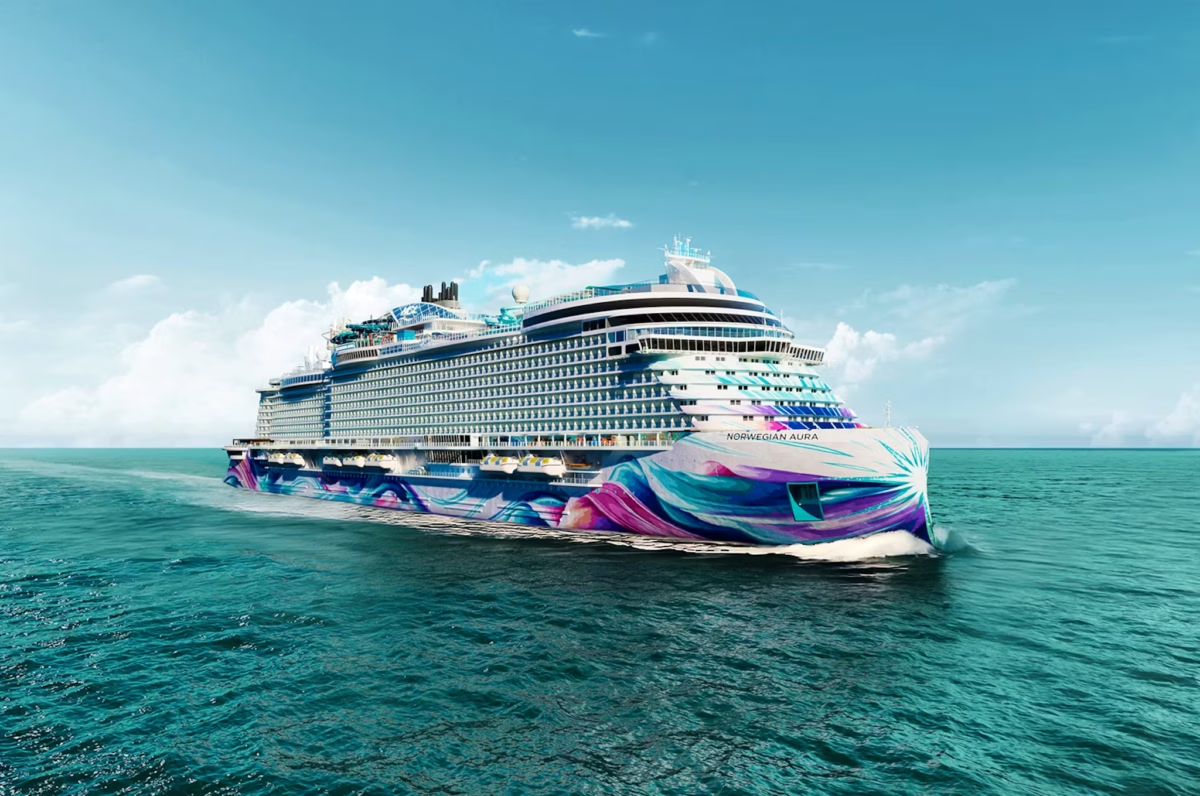
Looking ahead, Norwegian Cruise Line is positioning itself for measured growth focused on fleet modernization, onboard experience refinement, and broader destination deployment rather than rapid expansion alone.
Norwegian’s company’s strategy centers on new ship introductions and fleet optimization. The cruise line continues to invest in its next-generation vessels, including the expanded Prima Class, which builds on the design direction introduced with Norwegian Prima and Norwegian Viva.
These ships emphasize higher-end finishes, more outdoor space, and a greater variety of specialty dining and entertainment venues. Many consider the cruise line’s decisions as a signal towards a premium feel while maintaining the line’s casual cruising philosophy.

At the same time, Norwegian Cruise Line is balancing innovation with operational discipline. As part of a publicly traded company, fleet growth and capital spending are closely tied to financial performance and market demand.
This has led to a greater focus on revenue efficiency, itinerary flexibility, and maximizing onboard spending rather than simply increasing passenger capacity.

Destination strategy is also expected to play a growing role in the brand’s future. Norwegian has expanded its presence in Europe, Alaska, and Asia in recent years, while continuing to invest in private island experiences and exclusive shore offerings.
These investments align with broader industry trends toward differentiated destinations and curated experiences beyond the ship itself.
While Norwegian Cruise Line is unlikely to abandon the Freestyle Cruising model that defines its brand, the future points toward a more refined interpretation of that concept—one that blends flexibility with elevated design, dining, and service.


