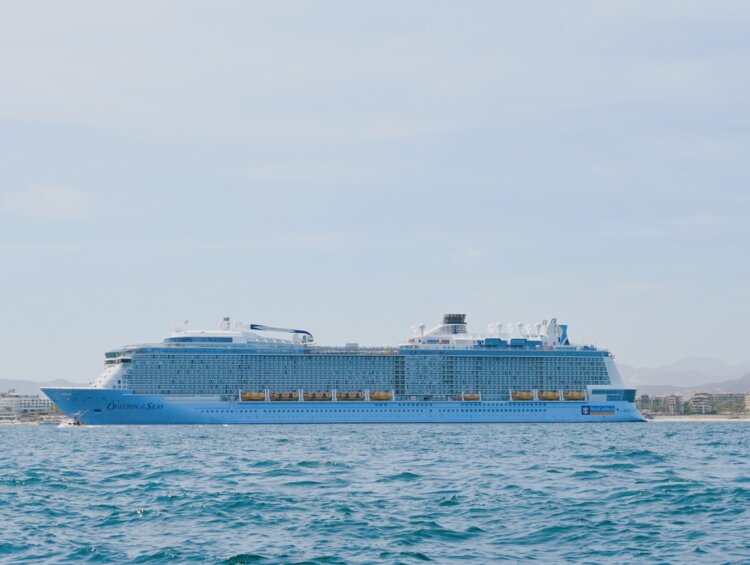
Federal wildlife officials have released new details about the pregnant fin whale discovered on the bow of Royal Caribbean’s Ovation of the Seas, revealing that preliminary findings indicate the animal suffered injuries consistent with a vessel strike.
In an update shared by NOAA Fisheries Alaska, officials said the 61-foot adult female fin whale found on the ship in Seward on June 19 was pregnant, freshly dead, and in good nutritional condition at the time of its examination.
The heartbreaking findings come after NOAA Fisheries, the Alaska SeaLife Center, and Alaska Veterinary Pathology Services conducted a necropsy on the whale over the weekend following its removal from the vessel.
According to NOAA, “The examination revealed that the whale was pregnant, freshly dead, and in good nutritional condition, with plenty of blubber and muscle.”
Preliminary findings point to vessel strike
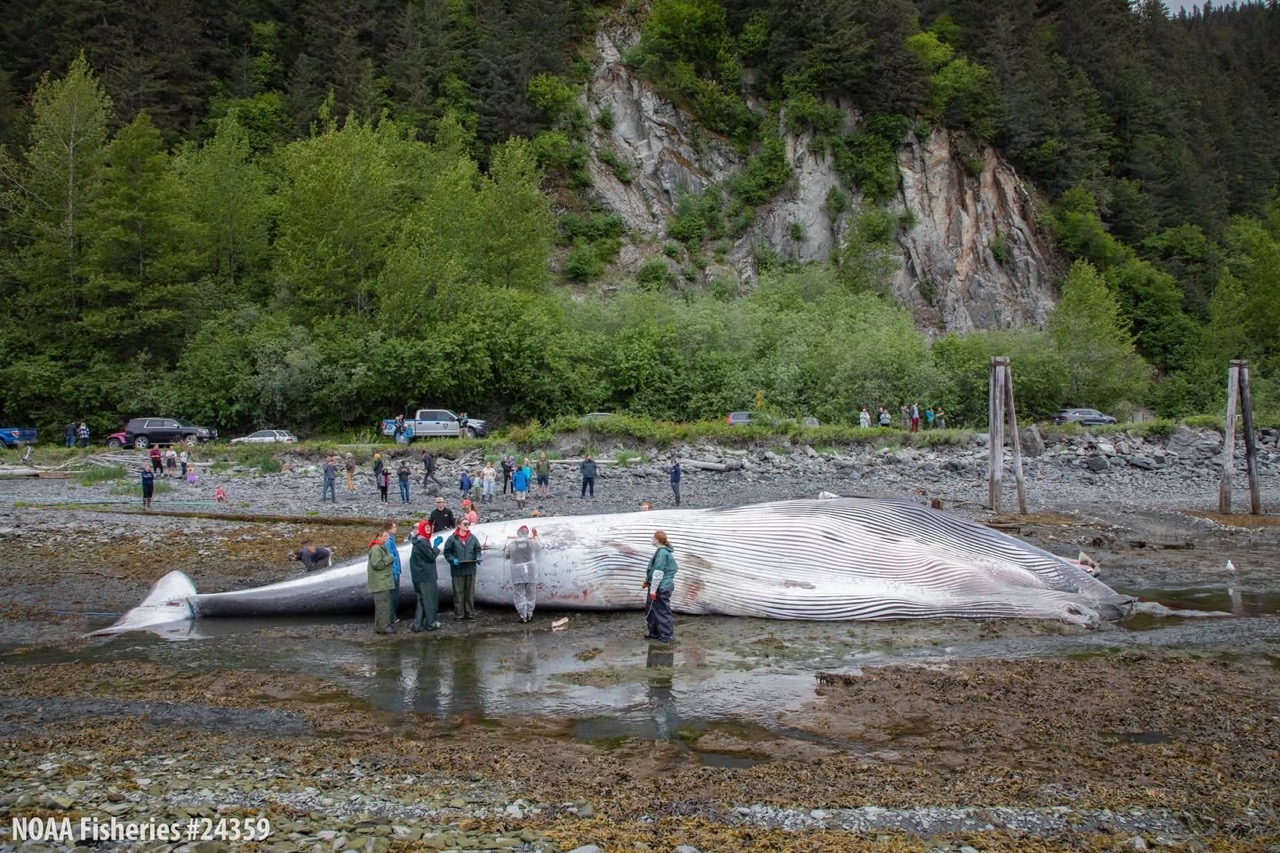
Perhaps the most significant update from investigators involves evidence of physical trauma discovered during the necropsy. NOAA said preliminary findings identified “blunt force trauma to the jaw, spine, and ribs consistent with a vessel strike.”
However, officials cautioned that the whale’s official cause of death has not yet been finalized. According to NOAA, “The official cause of death is pending further histological and diagnostic testing of collected samples, which can take months to complete.”
The agency also noted that its law enforcement investigation into the incident remains ongoing. NOAA has not provided details about the scope of the ongoing law enforcement investigation.
However, such investigations typically seek to determine the circumstances surrounding the incident, including when and where the whale may have been struck, whether any marine mammal protection regulations were violated, and whether additional evidence can help explain the whale’s death.
At this time, officials have not announced whether any conclusions have been reached regarding how or when the whale came into contact with the vessel.
Whale was found on Ovation of the Seas in Seward
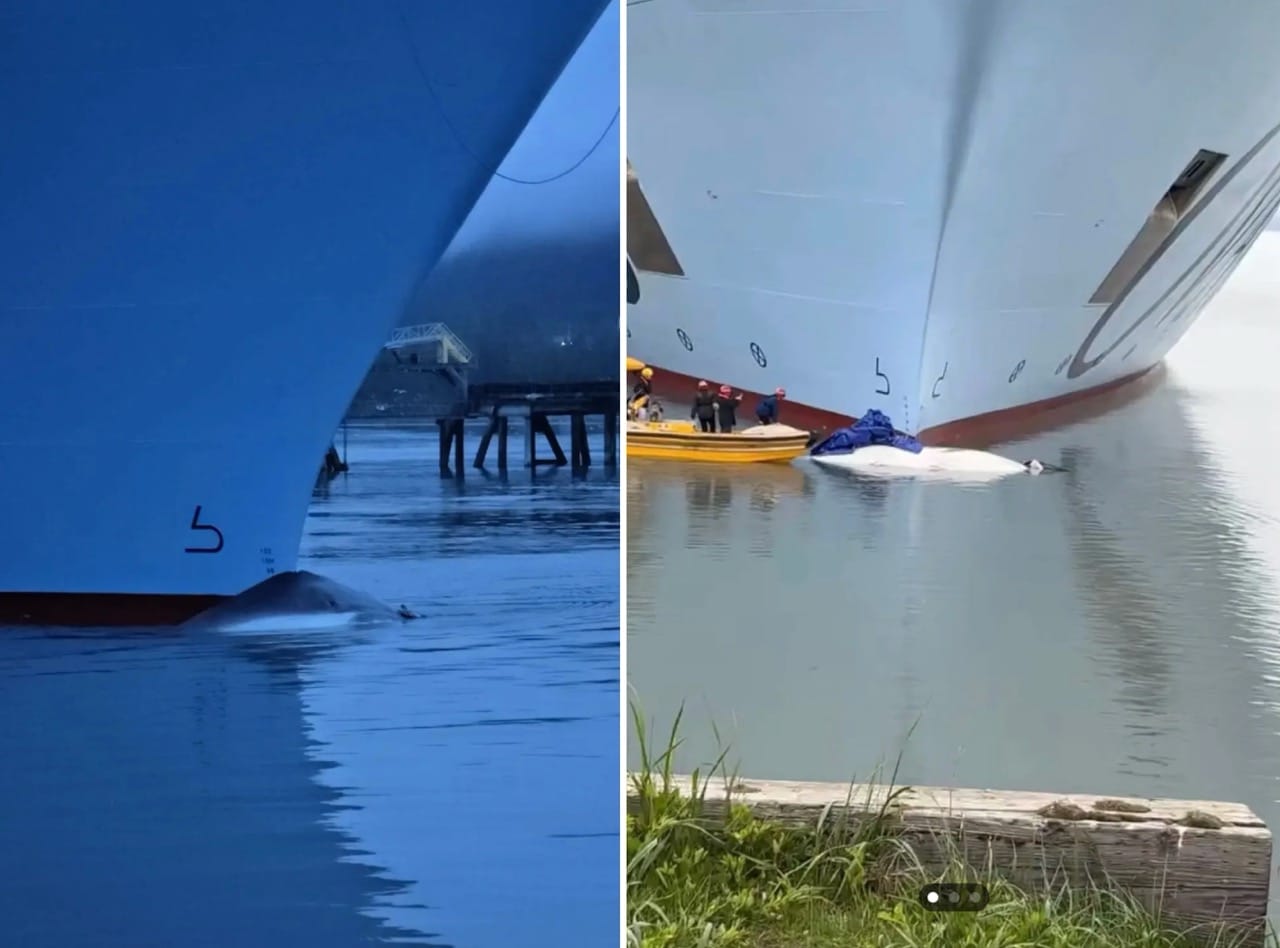
The fin whale was discovered when Royal Caribbean’s Ovation of the Seas arrived in Seward, Alaska, on June 19 after completing a seven-night, one-way Alaska cruise from Vancouver.
According to NOAA Fisheries Alaska, the vessel arrived with the dead whale positioned on top of its bulbous bow. Following the ship’s arrival, a local company towed the whale to a nearby beach where scientists began their examination.
The whale was later identified as a 61-foot adult female fin whale. The discovery drew widespread attention after heartbreaking photos shared on social media showed the massive animal draped across the front of the cruise ship as it docked in Seward.
NOAA states whale will be returned to the ocean
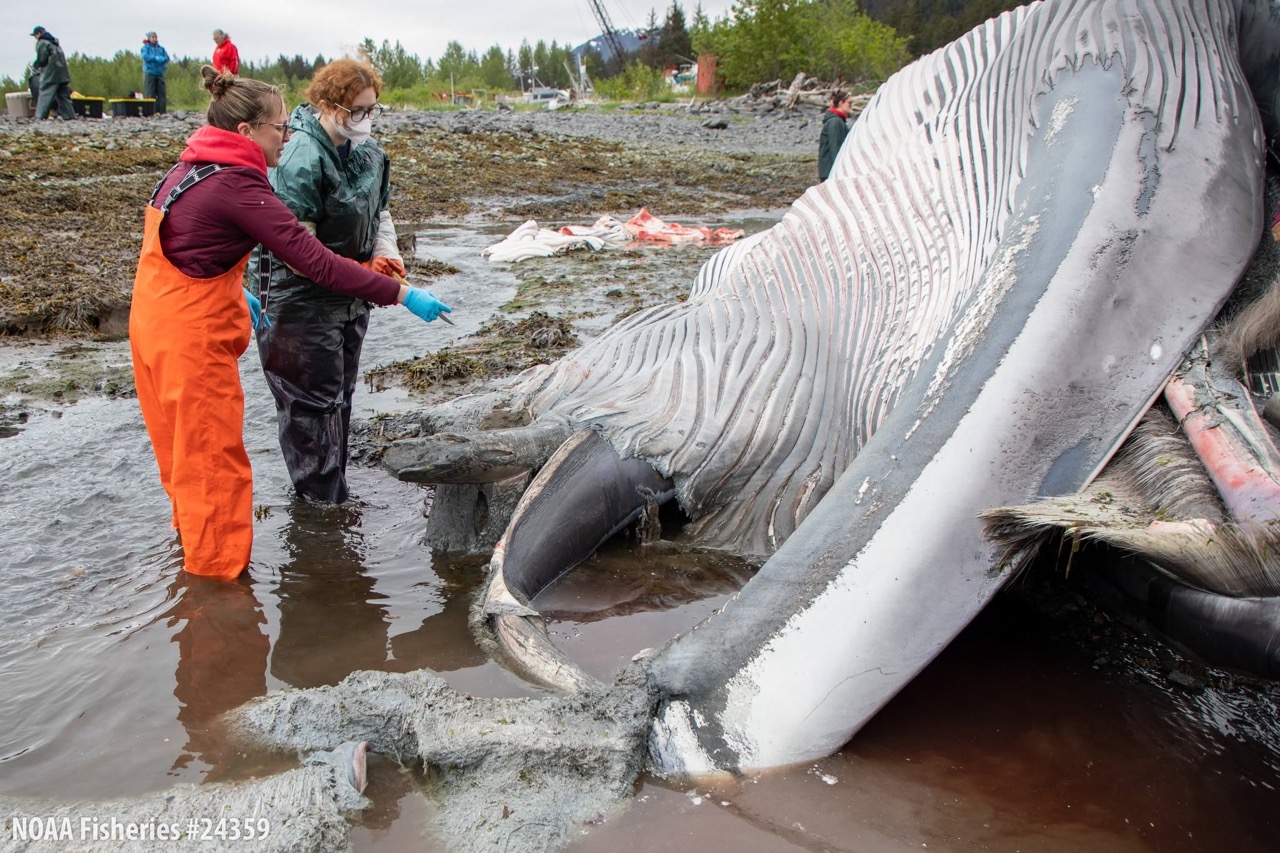
In the same announcement, NOAA also said plans are underway to tow the whale carcass back out to sea.
According to the agency, the whale is expected to sink naturally, creating what scientists refer to as a “whale fall.” When a whale carcass settles on the ocean floor, it becomes an important source of food and nutrients for a wide variety of deep-sea organisms, including sharks, fish, crabs, worms, and bacteria.
Researchers say whale falls can support entire ecosystems for years, with nutrients from a single carcass sustaining marine life long after the whale reaches the seafloor. NOAA noted that the fin whale is expected to nourish a wide variety of deep-sea marine life once she sinks.
Officials also thanked local volunteers, partner organizations, and community members for their assistance during the response effort and said additional information will be released as findings are confirmed.
Endangered species faces ongoing threats
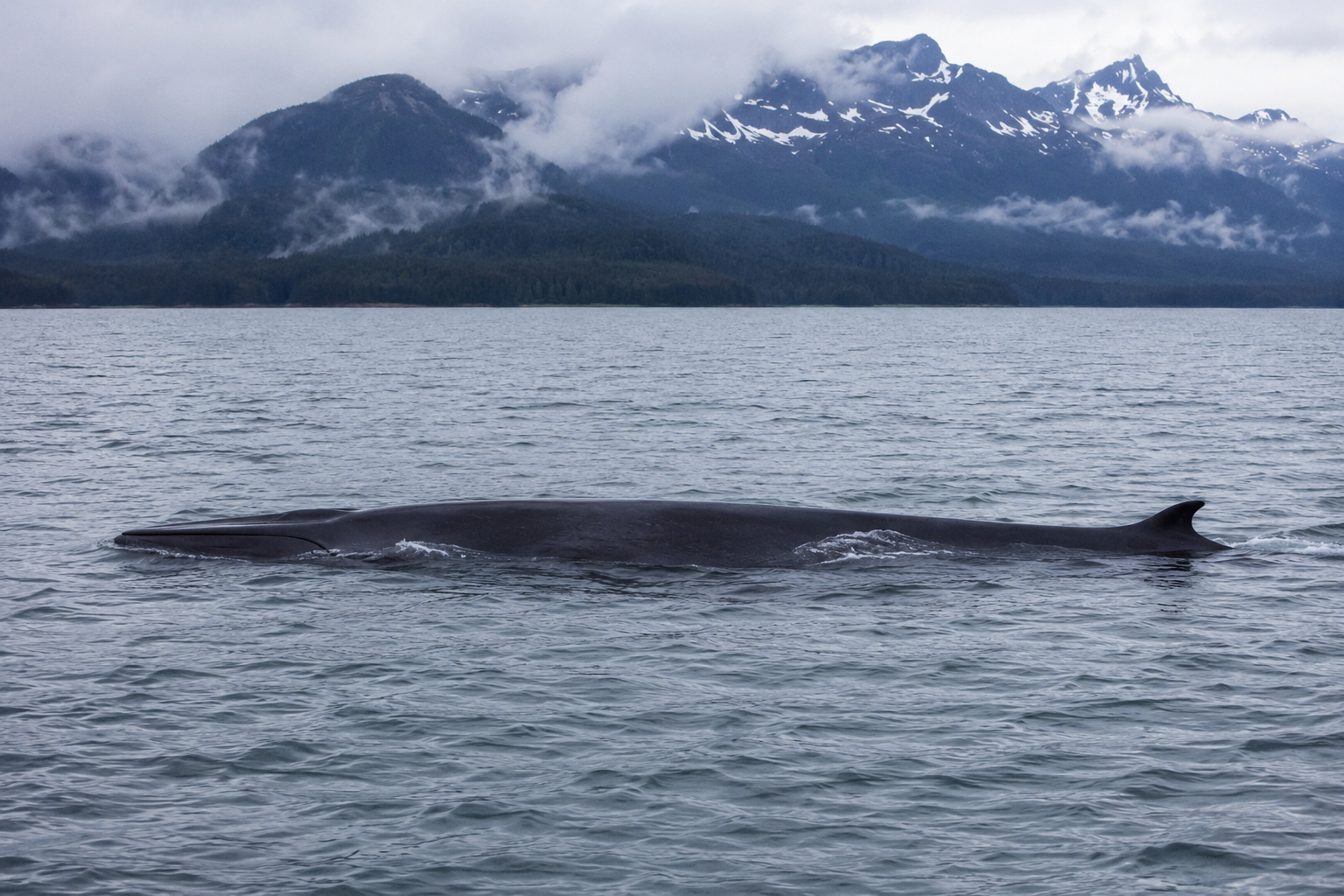
Fin whales are the second-largest whale species on Earth, surpassed only by blue whales, and are listed as endangered under the Endangered Species Act. The massive marine mammals can grow up to approximately 85 feet long and weigh as much as 80 tons.
According to NOAA, fin whales are found in oceans around the world and are typically found in deep, offshore waters. Although commercial whaling once devastated global fin whale populations, conservation efforts have helped some populations recover in recent decades.
Today, vessel strikes remain one of the primary threats facing fin whales, along with entanglement in fishing gear, underwater noise, climate change, and changes in prey availability. NOAA notes that collisions with large vessels are a particular concern because fin whales often inhabit areas frequented by commercial shipping and cruise traffic.
About Ovation of the Seas
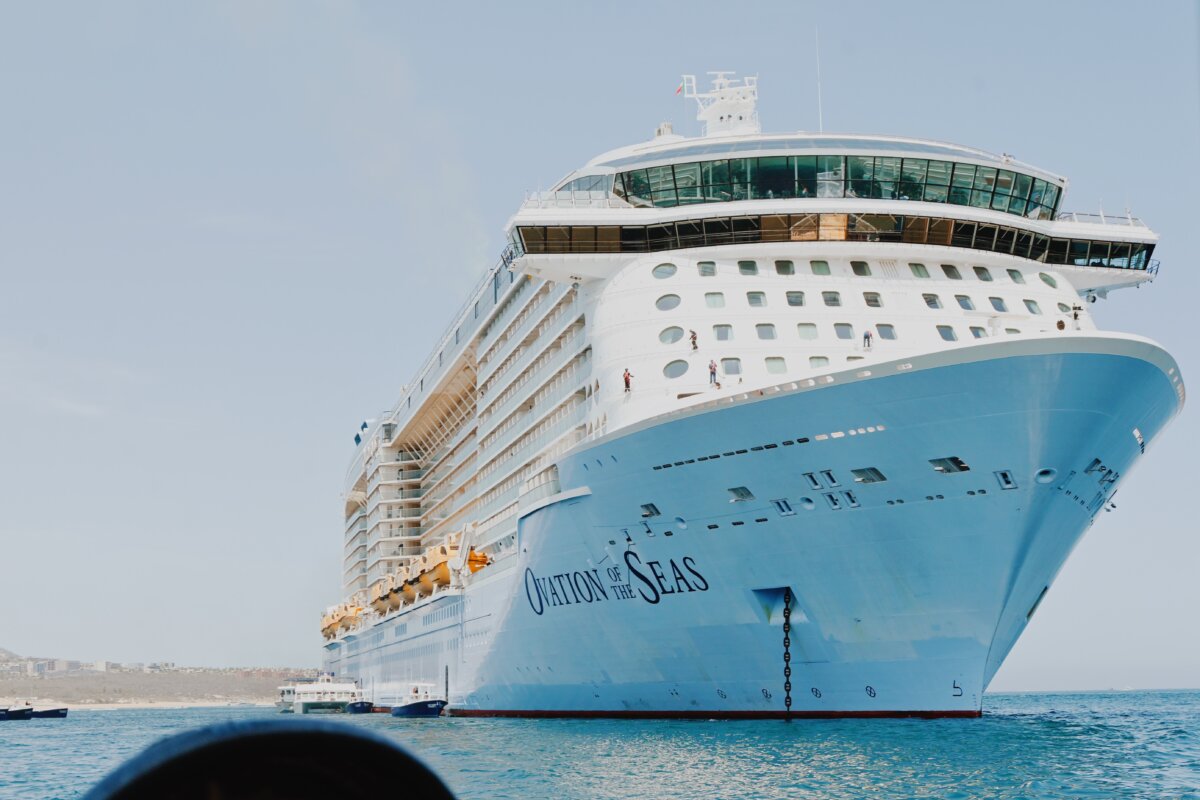
Ovation of the Seas is one of Royal Caribbean’s Quantum Class cruise ships. The 168,666-gross-ton vessel entered service in 2016 and can accommodate nearly 4,200 guests at double occupancy, along with approximately 1,500 crew members.
The ship is known for several signature attractions, including the North Star observation capsule, RipCord by iFLY skydiving simulator, FlowRider surf simulator, and the technologically advanced Two70 entertainment venue.
Ovation of the Seas spends its summer season operating Alaska cruises from Vancouver and Seward, offering both roundtrip and one-way itineraries that visit popular destinations such as Juneau, Skagway, Sitka, and Hubbard Glacier. During the winter season, the ship typically repositions to California to sail 3- and 4-night itineraries to Mexico.
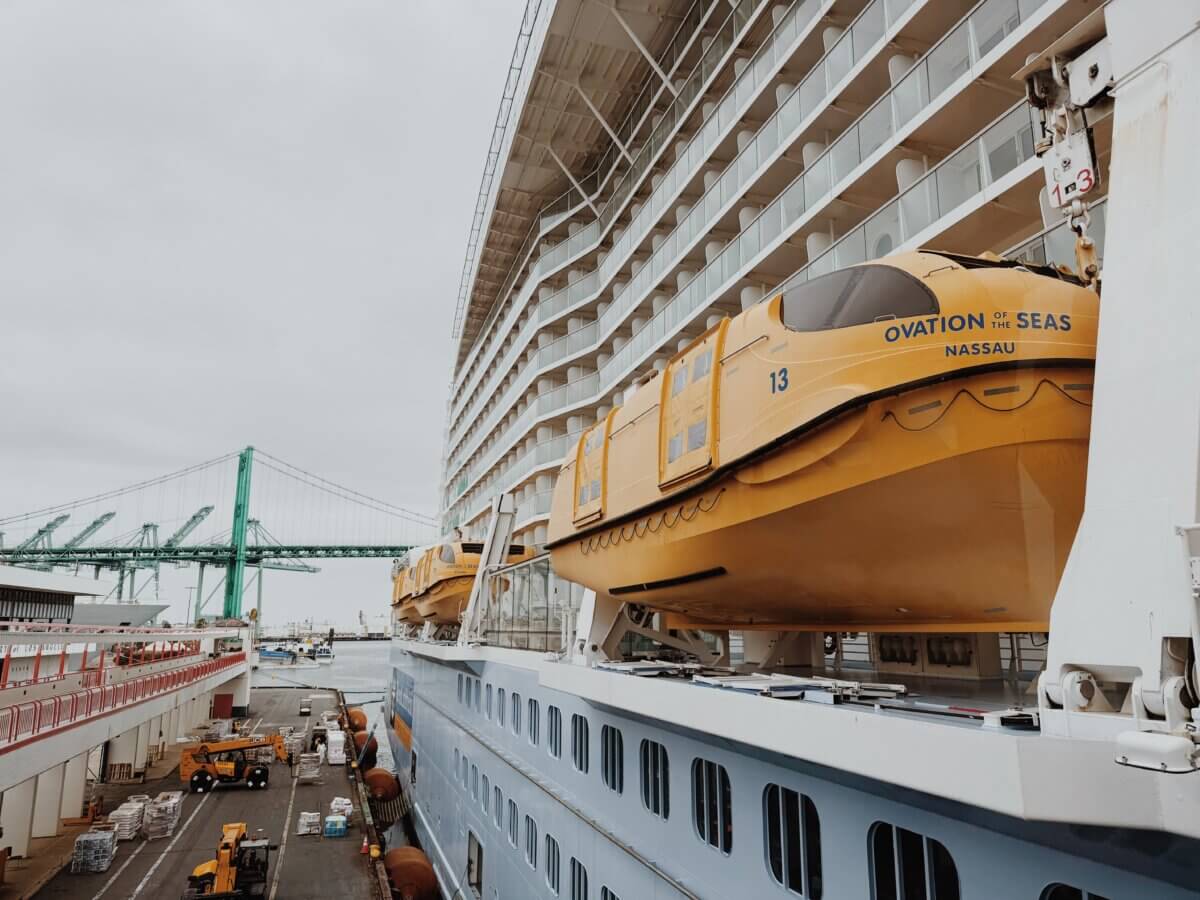
The whale investigation is just the latest unexpected development during what has already been an eventful Alaska season for Ovation of the Seas. In May, the ship was temporarily forced to shift embarkation and disembarkation operations from Seward to nearby Whittier after delays impacted Seward’s highly anticipated new “Port of Tomorrow” cruise terminal project.
The last-minute change affected multiple sailings and left some passengers scrambling to adjust Alaska Railroad reservations, hotel stays, and independently booked shore excursions. While the terminal ultimately opened and operations returned to normal, the discovery of a dead fin whale on the ship’s bow has once again placed Ovation of the Seas in the headlines during its 2026 Alaska season.