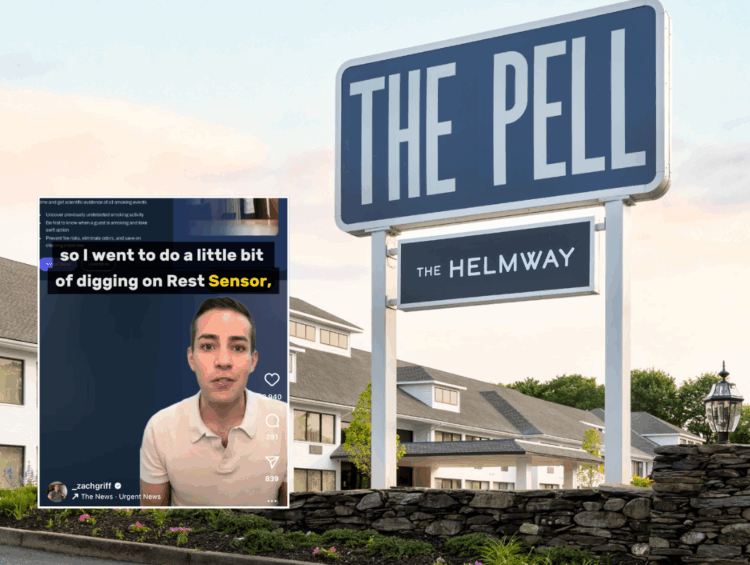
When travel reporter Zach Griff checked into The Pell, a JDV by Hyatt property in Rhode Island, he expected a relaxing stay with his wife and 9-month-old daughter. Unfortunately, he left on a sour note after the hotel charged him a $500 smoking fee following his stay.
The problem? Griff says he’s never smoked a day in his life, let alone in a hotel room while staying there with his family.
Griff, a senior reporter at The Points Guy, took his story public on social media after the hotel allegedly charged him the $500 fee based on readings from an air quality sensor. The sensor data was supplied by a third-party company called Rest, which claims hotels can easily collect fees from smoking events.

The device claimed smoking had occurred in Griff’s hotel room, but offered no proof beyond a graph with a spike on a “smoke detection score.”
The only thing that could have possibly triggered the sensor, according to the travel reporter, was his wife using the hairdryer. Griff says the hotel reversed the charge after he escalated the issue directly to Hyatt and posted about it on social media.
In email correspondence, the hotel’s general manager admitted the fee was never finalized on his card, yet still expressed “shock” at Griff’s public post. The manager also claimed the hotel was investigating the sensor system and said the sensors had since been disabled for further review.
Many other guests claim to be scammed by Hyatt
After going public with his story, Griff says he was contacted by other travelers claiming they had also been scammed with the $500 smoking fee. However, these travelers were never refunded their money.
In follow-up emails, Griff asked the hotel when the investigation would be completed. In addition, he asked how other scammed guests could get their money back. As of his last update, the hotel hadn’t responded.
In addition, Griff uncovered multiple online reviews from other guests stating they were wrongly hit with smoking fees while staying at The Pell. One guest, Jessica S, wrote on TripAdvisor:
“I stayed at The Pell Hotel and thought I got a great deal on the cost of the room, until I was wrongly charged $500 for smoking even though I didn’t smoke and was alone in Room 223 when the charge occurred.
While getting ready for my son’s Officer Candidate School graduation ceremony, I used a hairdryer in the bathroom. The manager, Brandon, showed me a detector chart with a sharp spike lasting over 30 minutes, exactly matching that time.
I spoke with the General Manager, who said they’ve tested the detectors themselves and “never” refund these charges because “everyone who is charged the smoking fee lies and claims they didn’t do it.” No opportunity for explanation, no escalation.
As a nurse practitioner, trusted to prescribe controlled medications, I value honesty. Even the best detectors can misread heat or aerosols. Stay here at your own risk—there’s no fair process if something goes wrong and $500 is a steep price to pay for something you didn’t do.”
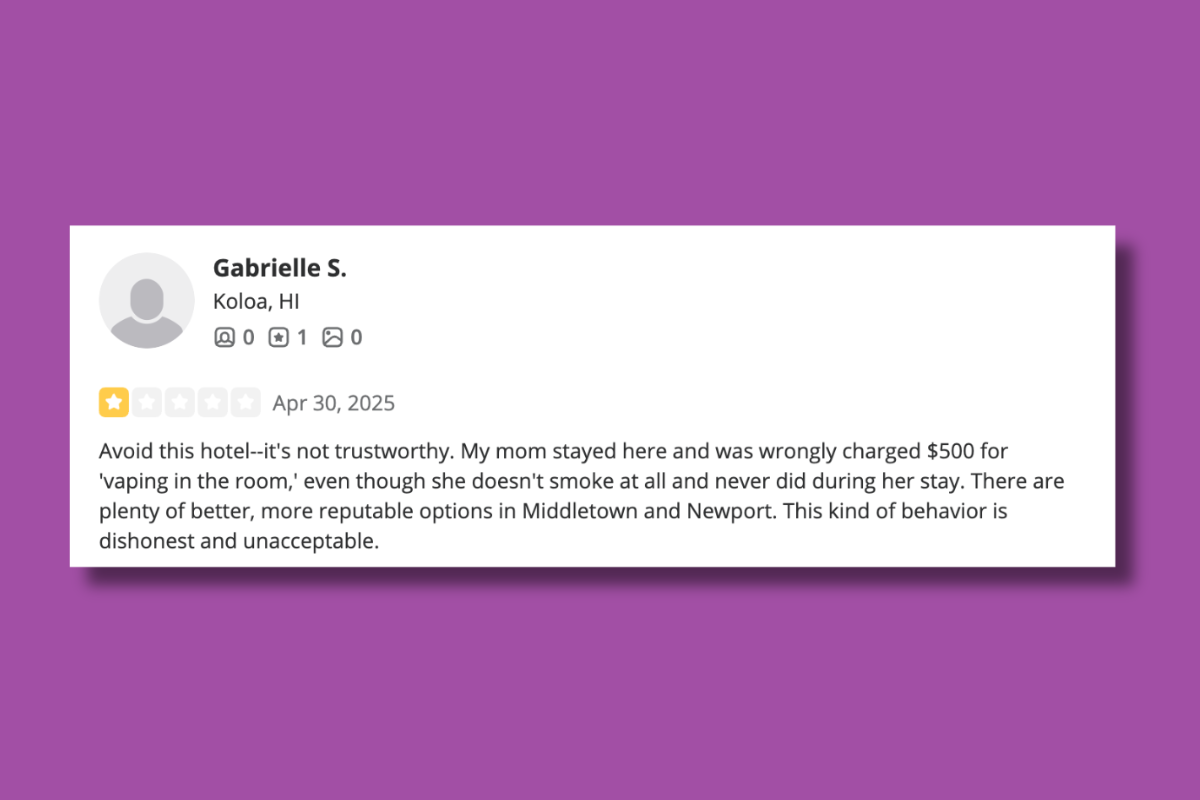
Another guest said their mom was wrongly charged $500 for vaping in the room, although she had never smoked before. The reviewer added, “There are plenty of better, more reputable options in Middletown and Newport. This kind of behavior is dishonest and unacceptable.”
Griff investigated other properties claiming to use the sensors

After sharing his story publicly, Griff decided to investigate other properties that claimed to use Rest Sensors. According to the travel reporter, he looked at hotels that had publicly endorsed Rest’s sensors on the company’s website.
Several hotel managers praised the technology for helping them “quickly articulate smoking charges,” raising concerns that some properties might be charging guests who never actually violated smoking rules.
To see if guests had encountered similar situations, Griff turned to TripAdvisor reviews. He was surprised to find multiple complaints from travelers who said they were hit with the same $500 smoking charge. He later shared screenshots of these reviews, highlighting just how common the scam appears to be.
One TripAdvisor reviewer claimed, “The issue came when we were double charged for our room and charged $500 for smoking! We don’t smoke or vape. I tried calling the hotel and left 3 different voicemails and 2 different emails, [none] of them ever returned.”

Another traveler, Megan J, warned: “I was charged a $300 ‘SMOKING FEE’ on my bill. The front desk never said a word about the charge, and I only saw it when I checked my receipt at the airport.”
The reviews didn’t stop there. Amy M. wrote, “The room smelled like stale smoke… then we were charged a bogus $500 smoking fee at checkout because their smoking detector supposedly detected smoke.”
Finally, one hotel guest even told Griff they had asked the hotel directly what the fee was for. “Oh also, earlier on in this process I asked [the manager] if the room needed to be cleaned and what was this $500 even for? And he said it wasn’t needing special cleaning, so he offered me $250, which shows how much of a scam this is!”
Rest promises hotels can “collect fees from smoking events”

At the center of these disputed fees is a product called Rest Sensor, which is a device marketed as a high-tech way for hotels to enforce no-smoking policies. The sensors claim to detect smoking with advanced algorithms, but many believe it’s just a money grab.
According to the company’s website, a Rest Sensor detects smoking in hotel rooms by monitoring air quality and analyzing factors like temperature and chemical levels. If it senses smoking, it automatically alerts hotel staff and provides a digital “evidence report” with time-stamped charts.
Hotels are pitching this sensor as a way to “easily enforce no-smoking policies” and even “collect fines with confidence.” The website claims their product is a win-win for everyone, including owners and guests.
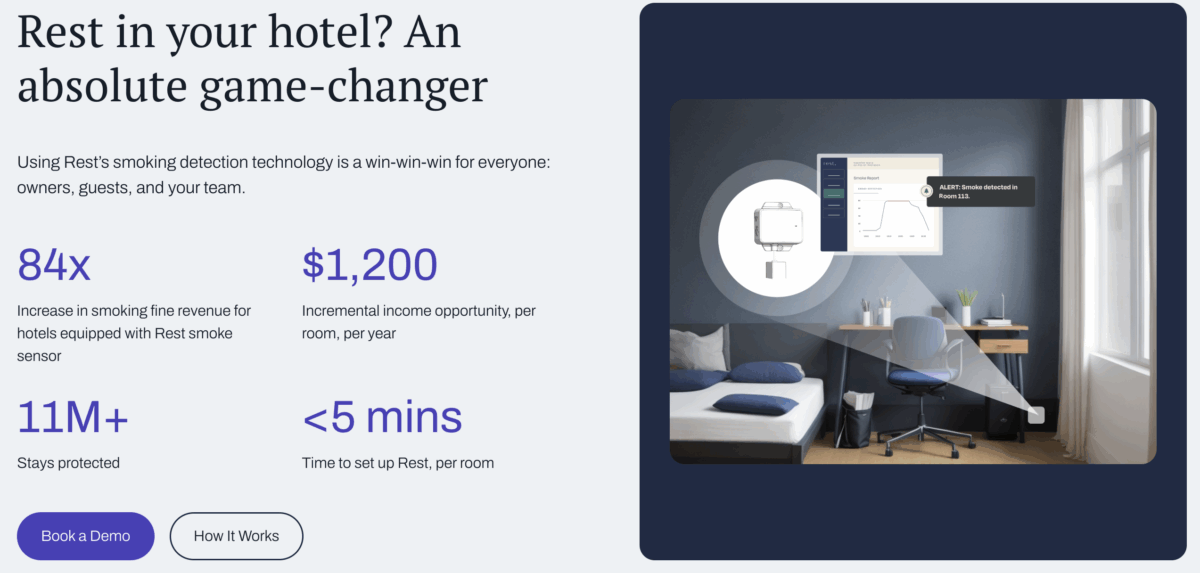
According to the company’s website, Rest Sensor can increase a hotel’s smoking fine revenue by 84 times, potentially generating $1,200 per room each year in extra income.
The device itself installs in under five minutes, connects to Wi-Fi, and operates continuously. In addition, Rest says it’s privacy-compliant with no cameras or audio recording.
However, many are questioning the accuracy and sensitivity of the sensors, especially when guests face hefty fees.
According to Griff’s experience, guests are being hit with the $500 smoking fee even if the sensor flags a single detection. To justify such a steep charge, it would seem far more ethical for hotels to reserve the fee for cases where the sensor shows repeated or sustained smoking, not just a one-time reading.
Social media users were quick to back Griff

As Griff’s video spread, the backlash wasn’t limited to angry travelers. One wedding planner commented, “We’re taking The Pell and Hyatt properties off our contact list for guest room blocks. Please keep us updated on this wild story!”
Another viewer shared, “This happened to me at the Hilton Garden Inn Waikiki — $300 charge for smoking when I never smoked. Got it reversed after calling. I hear other hotels are doing the same.”
Although the backlash prompted The Pell to disable its sensors pending investigation, Griff says Hyatt corporate still hasn’t addressed key questions. Additionally, other guests scammed by the smoking sensor have not been properly refunded.
In the comment section, Griff states he’s considering speaking with a lawyer about the scam and hopes to advocate for those who continue to be scammed by this product.